


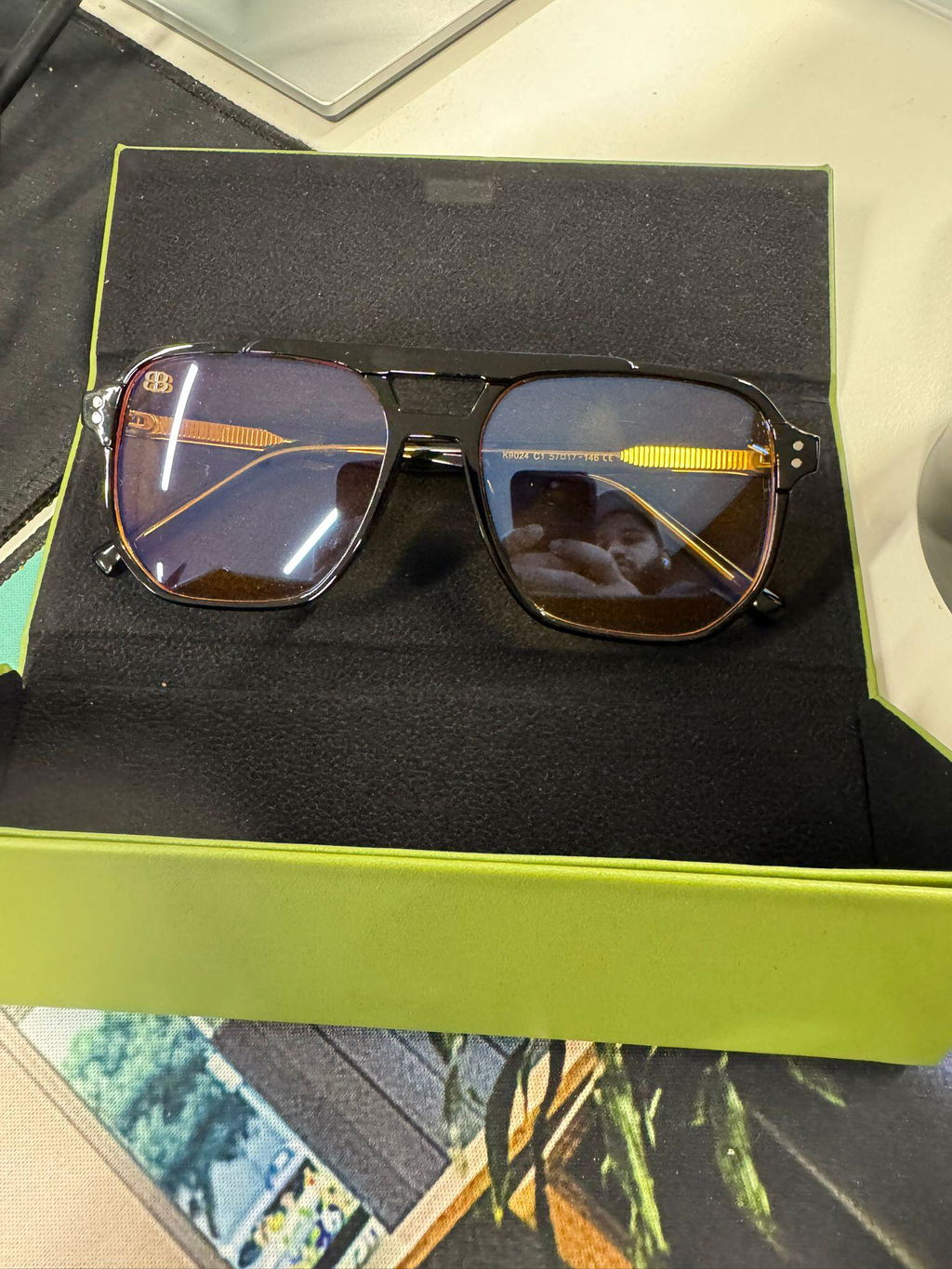
Atlas Daytime | Yellow
Gold Metal
$149.00
Skip to product information

Out of stock


Atlas Daytime | Yellow
Protection From Screens and Artificial Light
$149.00

Free Shipping Aus Wide
30 Day Returns - Wear Them First


The Science
Modern screens and LED lighting produce large spikes of high-energy blue light, particularly in the 400–500nm range.
This light is far more concentrated than the balanced spectrum our eyes evolved under, and prolonged exposure can overstimulate the visual system. During extended screen use, these wavelengths are commonly associated with digital eye strain, visual fatigue, headaches, and reduced viewing comfort.
Balterra’s Daytime (Yellow) Lens is engineered to selectively filter these specific wavelengths, softening the sharp spike of blue light emitted by screens while maintaining natural brightness and colour balance.
By smoothing this harsh light spectrum, the lens helps create a more comfortable visual environment for long hours of screen use.
The result is reduced eye strain, improved visual comfort, and better focus throughout screen-heavy workdays.
Through the Lens

This Is What Comfortable Vision Looks Like
The shift is subtle. That's the point.
Daytime doesn't strip your vision - it refines it. The yellow tint selectively filters the harsh spike of blue light your screen produces, while leaving everything else intact. Colours stay true. Clarity stays sharp. What changes is the strain you no longer notice building behind your eyes.
This is precision filtration for people who need to perform, not just protect.
Less fatigue. More focus. All day.
Let customers speak for us
I purchased these glasses to combat the harsh effects from my iPad that I use late afternoon and night.
Glasses are certainly comfortable and of high quality.
I love wearing them at night but I can't really use them while I'm on the iPad or phone as they block out so well that its hard to read my screen.
I think the yellow or orange might have been a better option for me.
I do wear the red glass at night when I'm not on my gadgets.
I highly recommend balerra brand.
Cheers Dunc
Duncan Mort

Excellent! And so much better than I pair I had from another company. I feel myself relax as soon as I put them on. Makes a genuine difference to how I sleep too. Highly recommend
Emma Kakos
Absolutely love my Balterra Horizon Night glasses! I've been using them daily when in the studio and also love using them when on board flights too, definitely helps me sleep much better! The blue light reduction is very noticeable and I love how you can continue using your devices in the evening without any effects on your sleep quality. Thanks Balterra!
Patrick Roberts

Absolutely loving my Balterra Horizon Daytime glasses lately ☀️
I’ve been wearing them all day and everything just feels… brighter, warmer like it’s permanently summer. Colours pop, contrast feels richer, and there’s this subtle glow to the world that honestly just lifts your mood.
What I love even more is that it’s not just aesthetic, there’s real science behind it. The lenses are designed to filter specific wavelengths of light, helping reduce harsh glare and visual strain while still enhancing natural light. It’s that perfect balance between clarity and comfort.
Style + science + that endless summer vibe… I’m sold. 😎
Patrick Roberts

Love my new specs! Shape and fit is so ideal, super comfy. Big Shout out to Racquel and the team for top notch customer service, seemed genuinely happy to help 🙌🏼
ads Carroll

Absolutely loving these glasses, not only do they keep my eyes feeling fresh whilst working on screens all day, I'm not feeling tired & I swear they keep me more focused! PLUS they make everything look so yellow and FUN!
Sophie Ballantyne

I never really considered using these in the day, but after a couple of days I noticed a massive improvement in afternoon tiredness. If you're on screens in an office all day, highly recommend. Quality frames as well
Kyle Duerden

Hands down the best blueblockers PURELY because they are a complete red, others are the orange tint which still lets in some blue light, but having the night+ red just adds that extra layer which other brands don't do. I fall asleep in minutes so I rate them highly
Kyle Duerden

I'm so impressed!! I bought these after looking at the Huberman glasses but wanted to find a local Australian brand instead, after a bit of research I chose balterra based on their designs and scientific specifications. They are seriously like entering another realm when you put them on!! So relaxing and calming, my aversion to artificial light and screens at night time is no longer an issue!
Beautifully wrapped and presented, fast shipping and great personal customer service. Love them so much I've already ordered a second pair. Thanks heaps!
Tash Adams
They make me feel so boujee hehe! I adore the quality of the frame and the shape (as someone who doesn't even wear sunglasses so i didn't know how they would look on me) - The whole packaging experience is also next level! Highly recommend!
Sahri Romeyn
Excellent quality, love the style, and really comfortable to wear. Just be aware, the red lens is quite dark. If you're after glasses you can wear whilst still being functional in the evening, go the amber.
Laura Kavanagh
Light-weight, comfortable frames that look great. Luxe packaging. A really quality product all around, and they do truly make a difference to how my eyes feel after prolonged screen time.
Laura Kavanagh
Atlas yellows actually look unreal and can be worn all day in office or at home because everything still looks so crisp through them. They’re comfortable af and look better than my Dr Franklins and Raybans so I even wear them out unless I need my actual sunnies.
Horizon Night pair do an insane job too.
Dyl Wags
Game changers! I thought it would blur my screens/make everything mono colour but it literally makes everything so crisp. Got horizon Night to go with them and they are unreal too.
Unless I’m needing my ACTUAL sun glasses, these will replace my fashionable pairs of raybans and Dr Franklins for the forseeable future. Fit so well on the face unlike most my other sunnies that I need to take off to every now and then.
Wouldn’t bother buying from any other company if blue light blocking & all day comfort with style is what you’re after.
Dyl Wags
Absolutely LOVE these glasses.
Stylish as well as functional. I can tell they block out so much more than my previous ones.Have made huge improvements on my sleep
Kaila Simpson
Science-Backed Lenses
Which lens is right for you?
Every Balterra lens is engineered to work with your body's natural rhythms. Choose based on when you wear them and what you need most.
|
Most Popular
Night+
Red Lens
Maximum protection before sleep
|
Night Amber Lens Evening wind-down & screen use | Daytime Yellow Lens All-day clarity & eye comfort | Other Clear Lens Blue Filter Mild blue-violet filtering only | |
|---|---|---|---|---|
| Light Blocking Performance | ||||
| Blue light blocked380–500nm range | ||||
| Green light blockedAvg. across 500–600nm | ||||
| Wavelength blockedUp to (nm) | Up to ~590nmBlue & full green — Verified | Up to ~540nmBlue & partial green — Verified | Up to ~445nmUV & violet only — Verified | ~400–440nmUV-violet fringe only |
| Best Use Cases | ||||
| Best time to wear | 1–2 hrs before bed | From sundown onwards | All day at a screen | Daytime only |
| Sleep improvementMelatonin support | ||||
| Circadian supportClock regulation | ||||
| Eye strain reliefScreen & artificial light | ||||
| Daytime screensOffice, work, study | ||||
Yes / Recommended
Partial / With caveats
Not suitable
Select a lens to explore ↓
Most Popular
Night+
Red Lens
Maximum protection before sleep
Light Blocking Performance
Blue light blocked380–500nm range
Green light blocked500–560nm avg
Wavelength blocked
Up to ~590nmBlue & full green — Verified
Best Use Cases
Best time to wear
1–2 hrs before bed
Sleep improvementMelatonin support
Yes
Circadian supportClock regulation
Yes
Eye strain reliefScreen & artificial light
Yes
Daytime screensOffice, work, study
Partial
Night
Amber Lens
Evening wind-down & screen use
Light Blocking Performance
Blue light blocked380–500nm range
Green light blocked500–560nm avg
Wavelength blocked
Up to ~540nmBlue & partial green — Verified
Best Use Cases
Best time to wear
From sundown onwards
Sleep improvementMelatonin support
Yes
Circadian supportClock regulation
Yes
Eye strain reliefScreen & artificial light
Yes
Daytime screensOffice, work, study
Partial
Daytime
Yellow Lens
All-day clarity & eye comfort
Light Blocking Performance
Blue light blocked380–500nm range
Green light blocked500–560nm avg
Wavelength blocked
Up to ~445nmUV & violet only — Verified
Best Use Cases
Best time to wear
All day at a screen
Sleep improvementMelatonin support
Partial
Circadian supportClock regulation
Partial
Eye strain reliefScreen & artificial light
Yes
Daytime screensOffice, work, study
Yes
Other Clear Lens
Blue Filter
Mild blue-violet filtering only
Light Blocking Performance
Blue light blocked380–500nm range
Green light blocked500–560nm avg
Wavelength blocked
~400–440nmUV-violet fringe only
Best Use Cases
Best time to wear
Daytime only
Sleep improvementMelatonin support
No
Circadian supportClock regulation
No
Eye strain reliefScreen & artificial light
Partial
Daytime screensOffice, work, study
No
Yes
Partial
Not suitable

Your cortisol and your screen
Your nervous system is being overloaded
Your cortisol follows a natural rhythm, rising in the morning and declining through the day. Research published in Quality in Sport found that blue light has a measurable stimulatory effect on cortisol secretion, reinforcing what researchers describe as the cortisol stress reaction. Hours at a screen send your nervous system the same signal as morning urgency, well past the point your biology expects it. The effect accumulates quietly, often surfacing as shortened attention and the kind of fatigue that has nothing to do with how hard you worked. Filtering the wavelengths that drive this response regulates the input, providing a more regulated system.
See the full article - Blue Light and Cortisol: What Your Screen Is Doing to Your Stress Response

THE CLEAR COATING PROBLEM
Most Blue Light Glasses were never going to work
Most blue light glasses use clear coatings that filter between 10 and 20 percent of incoming light. A Cochrane review of 17 randomised controlled trials found they make no measurable difference to visual comfort. The filtration is simply too low to register. We built the Daytime lens yellow because tinted lenses filter at a level the visual system actually notices. Research on blue-violet filtering spectacle lenses has found significant improvements in contrast sensitivity and visual acuity. At 83% filtration, independent spectrometer verified, the gap between ours and a clear coating is not a marketing distinction. It is the difference between a result and no result.
See the full article: Do Blue Light Glasses Work? Why the Tint Is Everything

TWO Mechanisms - One cause
Your Eyes Weren't Designed to Stare
When you focus on a screen, your blink rate can drop by up to 66 percent, from around 15 blinks per minute to as few as 5. But reduced blinking is only part of the picture. Blue light wavelengths have been shown to directly destabilise the mucin layer of the tear film, the component responsible for anchoring moisture to the surface of the eye, regardless of how often you blink. A 2016 study in PLOS One found that filtering short-wavelength blue light significantly improved visual acuity in patients with unstable tear films.
See the full article: Why Screens Cause Dry Eyes: The Two Mechanisms Nobody Is Talking About

The Right Light at the right time
When to Wear
Designed for the peak of your day.
Our yellow lenses are made for moments spent under artificial light, not natural sunlight. Wear them indoors during daylight hours — in offices, studios, or anywhere screens and LEDs dominate.
Whether you're deep in creative flow, working through your 9-to-5, or navigating digital spaces, these lenses filter harsh blue light without dimming your clarity.
Wear them:
– During computer work or screen exposure
– Under bright indoor lighting
– In co-working spaces, offices, or retail environments
– While commuting on overcast days or through city lights
Not for use outdoors in natural sunlight.
For full protection at night, transition to our Amber or Red lenses when the sun goes down.

Where Wellness Meets Design
Why Choose Balterra?
At Balterra, wellness isn’t an afterthought — it’s designed into every detail. We merge cutting-edge lens technology with refined silhouettes to create eyewear that not only supports your circadian health but elevates your sense of style. From the materials we choose to the forms we sculpt, every decision is intentional. Elegant. Considered. Functional. This is where wellness meets design — for those who expect more from what they wear and how they live.
Frequently asked questions
When Do I wear my Balterra Blue Light Blocking Glasses
Use Daytime lenses during the day in indoor or screen-heavy environments to reduce eye strain and support focus. Switch to Night (Amber) in low‑light evening settings—dim lamps, or go Night+ (Red) under intense artificial light—TV's, phones, LEDs, or overheads—for complete circadian protection.
Can I wear my Balterra Glasses All Day
Yes — when indoors and exposed to artificial light. Our lenses are designed to support your circadian rhythm by filtering overstimulating blue light from screens and LEDs.
However, they’re not intended for natural sunlight. For best results, wear them inside — and let real daylight reach your eyes when outdoors.
When will I get my order?
Orders are typically processed within 1–2 business days. Once dispatched, you’ll receive a confirmation email with tracking details so you can follow your delivery in real time.
Please note: during peak periods or product launches, dispatch may take slightly longer — but we always aim to get your order to you as quickly as possible.
Can I wear Balterra glasses with contact lenses or prescriptions?
Absolutely. Our non-prescription glasses are perfect for contact lens wearers. If you need prescription lenses, we’re working on custom RX options — stay tuned.
What if the frames don’t suit me?
We offer a 30-Day Right Fit Guarantee. Try them on at home — if the fit isn’t quite right, return them in reasonable condition and we’ll help you find the right pair or issue a refund.
You may also like
*Balterra eyewear is a general wellness product designed to support your circadian rhythm. It is not intended to diagnose, treat, cure, or prevent any disease or medical condition, and is not a substitute for professional medical advice. If you have a health condition, speak with a qualified health professional before use.